
Murder and Anger
Leader’s Guide
Quick links in this study:
This leader’s guide provides a comprehensive teaching framework for exploring Jesus’ powerful words in Matthew 5:21–26. In the Sermon on the Mount, Jesus deepens the commandment against murder by revealing that anger, contempt, and unresolved conflict carry spiritual consequences. Rather than addressing only outward behavior, He confronts the condition of the heart.
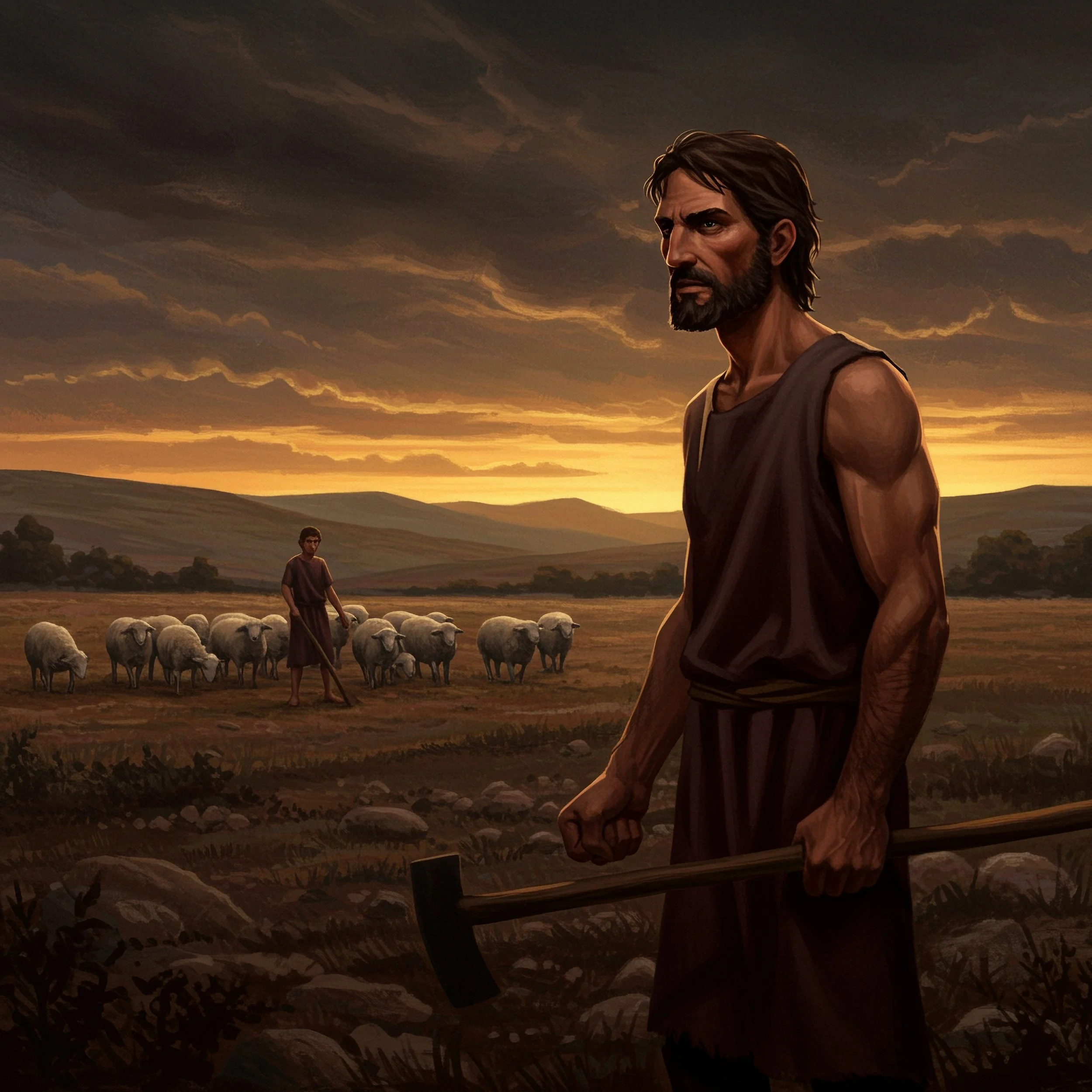
This study equips leaders to guide participants through a careful examination of Jesus’ teaching on anger, judgment, and reconciliation. It also connects His words to the account of Cain and Abel in Genesis 4:1–12, the first recorded murder in Scripture. Cain’s story illustrates how jealousy and unchecked anger can grow into destructive action, reinforcing the principle that sin begins internally before it manifests outwardly.
In addition, Luke 12:57–59 expands on the urgency of reconciliation, using courtroom imagery to emphasize settling matters before judgment comes. Together, these passages present a consistent biblical message: righteousness requires heart transformation, humility, and proactive peace-making.
This guide includes structured discussion questions, detailed leader notes, theological explanations, and practical application points. It is designed for small groups, Sunday school classes, youth groups, and adult Bible studies. Leaders are encouraged to facilitate open discussion while emphasizing biblical truth and personal reflection.
The goal of this study is not merely intellectual understanding, but heart-level transformation. As participants explore these passages, they will be challenged to examine their own attitudes, pursue reconciliation where needed, and reflect the character of Christ in both speech and action.
Murder and Anger Leader’s Guide
Understanding the Sixth Commandment
(Have someone read the verse outlined in purple Matthew 5:21)
“You have heard that it was said to those of old, ‘You shall not murder, and whoever murders will be in danger of the judgment.’
1. Who are “those of old?” Those of old refer to either Moses and the prophets or the teachers who interpreted their writings.[1]
The Sixth Commandment Revisited
2. Where in the Bible does it say you shall not murder? In the Ten Commandments. More specifically, the sixth commandment. Have someone read Exodus 20:13. It is also found in Deuteronomy 5:17.
Have someone read either verse in the King James version. Not to devalue this version, but the King James Version interpreted this as the word kill.
3. What is the difference between kill and murder? Historically, killing means to cause death of an animal, person, or other living thing. Murder, even back in the time of the Old Testament, was the unlawful killing of another human being with the intent to kill. Commonly known as premeditated.
Leader to read: In Hebrew, the word "murder"[2] is used in Exodus 20:13 and Deuteronomy 5:17. It is translated as "רצח" (ratzach)[3], which specifically refers to the act of unlawfully killing someone or intentionally committing murder. On the other hand, the word "kill" is translated as "הרג" (harag)[4], which has a broader meaning and can refer to killing someone either intentionally or accidentally, lawfully or unlawfully, to determine whether the killing was accidental or premeditated and deliberate.
4. What is the judgment of murder? This literally means “man’s judgment.” Judgment of murder was commonly decided upon by the court of that city or town, consisting of seven members.
The Meaning of “Raca” and “Fool”
Jesus’ interpretation of “Murder” (have someone read the outlined verse in black Matthew 5:22)
But I say to you that whoever is angry with his brother without a cause shall be in danger of the judgment. And whoever says to his brother, ‘Raca!’ shall be in danger of the council. But whoever says, ‘You fool!’ shall be in danger of hell fire.
5. What does Jesus compare murder to? Anger with his brother without cause.
6. What is the difference between being “in danger of the judgment to murder” and being “in danger of the judgment to anger with his brother without a cause?” Being in danger of the judgment of murder is the man’s legal system or one’s peers who decide in court. Being liable to judgment for anger with his brother without a cause, you are liable to divine judgment, God’s judgment.
7. What does “raca” mean? The term “raca” means one who is worthless or an empty-headed man.[5]
8. Does “brother” specifically mean just your brother? No. It also includes a neighbor, or perhaps anyone with whom we may be associated.
9. Does Jesus consider the word “Fool” a swear word, and will you be condemned to the hell of fire? No. Jesus uses this word and is referring to the Pharisees. Have someone read Matthew 23:17. Jesus is referring to the attitude of the heart.
10. What is the hellfire? Hades or hell is the most common interpretation.
Leaving the Gift at the Alter
Reconcile before worshiping (have someone read the outlined verse in grey Matthew 5:23-24.)
Therefore if you bring your gift to the altar, and there remember that your brother has something against you, leave your gift there before the altar, and go your way. First be reconciled to your brother, and then come and offer your gift.
11. What does the gift represent when you bring it to the altar? The one who brings the gift is their sacrifice.
12. Who is responsible for taking the initiative in reconciliation? Jesus states that the person who remembers the conflict should initiate the engagement. If you realize someone has something against you, then that person feels you have intentionally or unintentionally done something that hurt or wronged them.[6]
13. Why does Jesus want you to leave your gift at the altar before you reconcile with your brother? Have someone read Isaiah 1:11-17.[7] God tells the people their offerings mean nothing to Him because their hearts are corrupt. He calls them to repent and change from their hypocritical ways, then make the sacrificial offering. Here, Jesus says to pause the worship and leave the offering.
14. Have someone read Romans 12:18.[8] Both verses emphasize responsibility in making peace. Why do you think restoring relationships is so important to God? Jesus teaches that reconciliation is more important and takes precedence over the most sacred ritual.
15. What if you and your brother are not able to reconcile your differences? This is not an exhaustive list; however, what steps do you need to ensure you have met what Jesus is telling you to do?
a. It is your responsibility to take the initiative.
b. Reconciliation begins in the heart. Go call you to forgive and release your resentment in your heart. Read Mark 11:25[9]
c. Healthy boundaries are sometimes necessary. If the environment is unsafe, it is wise to establish safe, healthy boundaries.
d. God accepts your gift when your heart is right. Read 1 Samuel 16:7.[10]
The Urgency of Reconciliation
Settling Matters Quickly
Jesus challenges His listeners (Have someone read the outlined verse in red Luke 12:57.)
“Yes, and why, even of yourselves, do you not judge what is right?
16. In Luke 12:57, what does Jesus challenge His listeners to do? Let them judge for themselves what is right.
Consequences of not reconciling. (Have someone read the outlined verses in green, Matthew 5:25 and Luke 12:58.)
Agree with your adversary quickly, while you are on the way with him, lest your adversary deliver you to the judge, the judge hand you over to the officer, and you be thrown into prison. (Matthew 5:25)
When you go with your adversary to the magistrate, make every effort along the way to settle with him, lest he drag you to the judge, the judge deliver you to the officer, and the officer throw you into prison. (Luke 12:58)
17. What could happen if you do not reconcile and are taken to court? You may be put in prison. This is the earthly meaning.
18. What does Jesus tell them to do with their accuser on the way to court? Try to settle before you arrive.
19. Who might the judge turn the person over to? Once you are delivered to the judge, the judge will deliver to you to the officer.
20. What is the final consequence spoken of? The officer will throw you into prison.
21. As Jesus is teaching the crowd the earthly meaning, how could this be interrupted from a spiritual perspective? This is an urgent call for repentance. The journey to court symbolizes the journey through life. God is the judge, the officers are God’s agents of justice (probably the angels), the adversary is the one who you have wronged or someone who has a case against you, and prison is the eternal judgment after death. Jesus urges you to make peace with God while you still have time and before it is too late. The judgment is far worse in eternal hell than in mortal prison.
Getting out of prison. (Have someone read the outlined verses in blue, Matthew 5:26 and Luke 12:59.)
Assuredly, I say to you, you will by no means get out of there till you have paid the last penny. (Matthew 5:26)
I tell you, you shall not depart from there till you have paid the very last mite.” (Luke 5:59)
22. What is a mite? The term penny is derived from the translation of farthing in the King James Version. Farthing was derived from the Greek word Kodrantes (κοδράντης).[11] A quadrans was the least of the Roman copper coins, a mere quarter of an as—the same as, equivalent to the farthing or two lepta, the smallest Jewish mites.
23. What does Jesus say you will not get out of prison until what? You will not get out of prison until you have paid the last penny. From a biblical perspective, no matter how trivial or insufficient we may consider a sin in the eyes of men, it is still a sin in the eyes of the Lord. No transgression is insignificant unto Him whose judgment is righteous and final.
Cain and Abel: The First Example of Unchecked Anger
Leader to read: We will now go on a journey and revisit the first recorded murder that took place between Abel and Cain. We will cover why Cain became angry, how God offers counsel to intervene in what led to his plot to murder his brother, the murder itself, and the judgment of the crime.
The act of offering. (Have someone read the outlined verses in blue, Genesis 4:1-4.)[12]
Now Adam knew Eve his wife, and she conceived and bore Cain, and said, “I have acquired a man from the Lord.” Then she bore again, this time his brother Abel. Now Abel was a keeper of sheep, but Cain was a tiller of the ground. And in the process of time it came to pass that Cain brought an offering of the fruit of the ground to the Lord. Abel also brought of the firstborn of his flock and of their fat. And the Lord respected Abel and his offering,
24. What is the difference between the offerings of Cain and Abel? Abel brought the firstborn of his flock and of their fat portions. Read Leviticus 3:16.[13] It does not state that Cain brought the first of the produce from the ground, so we would have to conclude that, since it is mentioned that Abel did bring the firstborn of his flock, Cain did not bring the first harvest of his fruits.
Offering rejected. (Have someone read the outlined verse in red, Genesis 4:5.)
but He did not respect Cain and his offering. And Cain was very angry, and his countenance fell.
25. Why did God reject Cain’s offering? We came up with two possible reasons. One, Abel brought the firstborn of the flock, which represents the best. Cain did not bring the first of his produce. Read Hebrews 11:4-6.[14] Two, the problem might not have been Cain’s gift; it was probably Cain’s heart.
God’s Warning to Cain
God offers counsel to Cain’s offering. (Have someone read the outlined verses in green, Genesis 4:6-7.)
So the Lord said to Cain, “Why are you angry? And why has your countenance fallen? If you do well, will you not be accepted? And if you do not do well, sin lies at the door. And its desire is for you, but you should rule over it.”
26. How does God consult Cain? God speaks directly to Cain. He explains the situation, that sin is crouching at his door. God gives guidance. If he does what is right, his gift will be accepted. God offers a path to avoid wrongdoing. God emphasizes human responsibility, and Cain must choose obedience or allow sin to dominate his life.
From Anger to Murder
Cain murders his brother. (Have someone read the outlined verse in black, Genesis 4:8.)
Now Cain talked with Abel his brother; and it came to pass, when they were in the field, that Cain rose up against Abel his brother and killed him.
27. Where did Cain take Abel before killing him? In the field.
28. Why did Cain kill his brother Abel? Primarily out of jealousy. Cain became jealous because God accepted Abel’s offering and not his. This made Cain angry and depressed, and this led him to violence.
Cain deflects accountability. (Have someone read the outlined verse in purple, Genesis 4:9.)
Then the Lord said to Cain, “Where is Abel your brother?” He said, “I do not know. Am I my brother’s keeper?”
29. God knows where Abel is. Why did God ask Cain, “Where is Abel, your brother?” Because God was looking to draw out a confession from Cain. God wanted Cain to have the opportunity to tell the truth and admit his wrongdoing.
30. What is the next sin Cain commits? He lies to God and tells him, “I do not know.” Cain knew exactly where his brother was because he had murdered him.
Abel’s brood cries out for justice. (Have someone read the outlined verse in orange, Genesis 4:10.)
And He said, “What have you done? The voice of your brother’s blood cries out to Me from the ground.
31. Then the Lord said to Cain, “What have you done?” If God already knows what Cain did, why does God ask this question? God’s question to Cain is a rhetorical one. He knows what Cain has done. The question to Cain is not meant to obtain information, but to confront, accuse, and expose Cain of his guilt.
32. How can blood cry out to God from the ground? The blood crying out is symbolic of the injustice and guilt of murder that demands God’s response. Even if humans hide their sins, God sees every wrong. Abel’s and Jesus’s blood is referred to in Hebrews 12:24. Jesus’s blood speaks of forgiveness, while Abel’s blood speaks of judgment.
Cain’s punishment for Abel’s murder. (Have someone read the outlined verses in grey, Genesis 4:11-12.)
So now you are cursed from the earth, which has opened its mouth to receive your brother’s blood from your hand. When you till the ground, it shall no longer yield its strength to you. A fugitive and a vagabond you shall be on the earth.”
33. What consequence did God give Cain? He would be a fugitive and wanderer on the Earth.[15]
34. What sign did God say would happen to the ground because of Cain’s action? It would no longer yield its strength to him.
[1] Barnes, Albert, and Robert Frew. Notes on the New Testament : Matthew and Mark. Grand Rapids, Mich., Baker Book House, 1985. p. 51.
[2] Green, Jay. The Interlinear Bible : Hebrew - Greek - English; with Strong’s Concordance Numbers above Each Word. London, Hendrickson, 2011. pp. 65 & 159.
[3] Strong, James. The New Strong’s Expanded Exhaustive Concordance of the Bible. Nashville, TN, Thomas Nelson, 2010. Hebrew and Aramaic dictionary p.266.
[4] Strong, James. The New Strong’s Expanded Exhaustive Concordance of the Bible. Nashville, TN, Thomas Nelson, 2010. p. 71.
[5] Strong, James. The New Strong’s Exhaustive Concordance of the Bible, Supersaver. Thomas Nelson Inc, 2009.
[6] Barnes, Albert, and Robert Frew. Notes on the New Testament : Matthew and Mark. Grand Rapids, Mich., Baker Book House, 1985. pp. 53-54
[7] Radmacher, Earl D., et al. NKJV Study Bible. Thomas Nelson, 2018, pp. 974-975.
[8] Radmacher, Earl D., et al. NKJV Study Bible. Thomas Nelson, 2018, p. 1696.
[9] Radmacher, Earl D., et al. NKJV Study Bible. Thomas Nelson, 2018, p. 1488.
[10] Radmacher, Earl D., et al. NKJV Study Bible. Thomas Nelson, 2018, p. 418.
[11] Strong, James. The New Strong’s Expanded Exhaustive Concordance of the Bible. Nashville, TN, Thomas Nelson, 2010. Hebrew and Aramaic dictionary p.141.
[12] Radmacher, Earl D., et al. NKJV Study Bible. Thomas Nelson, 2018, pp. 10-11.
[13] Radmacher, Earl D., et al. NKJV Study Bible. Thomas Nelson, 2018, p. 153.
[14] Radmacher, Earl D., et al. NKJV Study Bible. Thomas Nelson, 2018, p. 1873-1874.
[15] Houston's First. “Genesis 4:1-25: The First Murder.” YouTube, 19 Dec. 2023, www.youtube.com/watch?v=ThcR-o_G784. Accessed 17 Nov. 2025.