
Murder and Anger
In-Depth Summary
Quick links in this study:
When Jesus spoke the words recorded in Matthew 5:21–26, He transformed how people understood the commandment, “You shall not murder.” In the Sermon on the Mount, He moved beyond outward actions and addressed the condition of the heart. While the law prohibited murder, Jesus revealed that unresolved anger, contempt, and hatred also bring spiritual danger.
In this in-depth study of Matthew 5:21–26, we examine why Jesus connects anger with judgment and what He means by terms like “Raca” and “fool.” We also explore His urgent call to reconciliation—commanding believers to seek peace with a brother before offering a gift at the altar. This teaching emphasizes that restored relationships matter deeply to God.
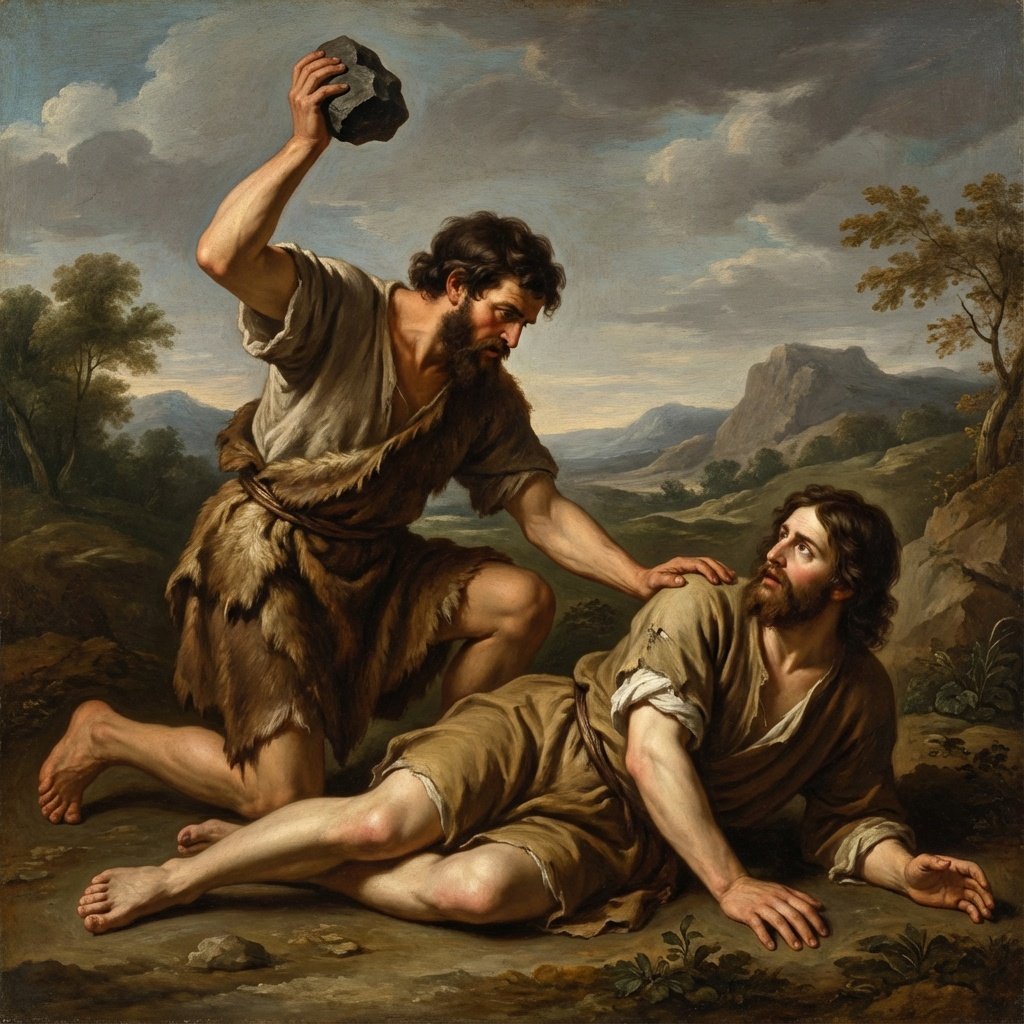
To better understand the seriousness of anger, we also look back to Genesis 4:1–12 and the account of Cain and Abel. Cain’s unchecked anger grew into jealousy and ultimately murder, providing a powerful illustration of how inward sin can produce outward destruction. By comparing these passages, we see a consistent biblical principle: sin begins in the heart long before it appears in action.
Additionally, Luke 12:57–59 reinforces the urgency of settling matters quickly, highlighting the importance of reconciliation before judgment comes.
This study will help you understand the spiritual weight of anger, the biblical meaning of reconciliation, and how to apply Jesus’ teaching in everyday life. Whether you are studying personally or leading a group, this passage challenges us to examine not only our actions—but our hearts.
Murder and Anger in the Bible: In-Depth Study of Matthew 5:21–26
The in-depth summary of each bible study is much different from the small group bible study laid out before the leader and the students. The small group studies are intended to be interactive, provide a learning atmosphere for students, and open discussions allowing for interpretations of what the gospels’ witnessed. The in-depth summary is designed to help the leader with expansive information, much more than what is in the text notes found at the bottom of every bible page. An exhaustive search was completed on each verse to help the Leader answer questions that may come up during the study.
Jesus explains in parables how anger in the heart can lead to a murderous action. He will provide a solution to avoid going down this path, so your hearts can be at peace with one another. In His teaching, He made it clear that the commandment against murder extends far beyond the physical act itself—it includes harboring anger, hatred, or contempt toward others. Just as the act of murder is condemned, so too are the inner attitudes and violent tempers that give rise to such deeds. Through this, Jesus emphasized that true righteousness begins within, transforming the heart before it manifests in behavior.
Understanding the Context of Matthew 5:21–26
There are three parts to this verse. One, “You have heard that it was said of those of old;” two, “You shall not murder;” and three, “whoever murders will be in danger of the judgment.”
1. “You have heard that it was said of those of old.” This either refers to Moses and the prophets or more probable Jesus is referring to the teachers who interpreted their writings.[1]
The Sixth Commandment Revisited
2. “You shall not murder.” The numerous different bibles that interpret this verse use either the word kill, or murder. Not to devalue, but even the historic King James Version interprets this verse using the word kill. Have someone read KJV Matthew 5:21.[2] In Exodus 20:13 and Deuteronomy 5:17, in the original Hebrew text, the word "רצח" (ratzach) is translated as “murder”[3]. In Strong’s Exhaustive Concordance, ratsach is noted as 7523[4], which specifically refers to the act of unlawfully killing someone or intentionally committing murder. This term was used 47 times in the Bible and was commonly referenced as premeditated. The word "kill" is translated as "הרג" (harag), which means to kill someone either intentionally or accidentally, lawfully or unlawfully. This term is used to describe the killing of animals. [5] To determine whether the killing was accidental or premeditated and deliberate, it is essential to analyze the context in which the word is used. However, many Bible translations use the word "kill" instead of "murder," which can confuse the gravity of the act. Read Jesus’ interpretation of the Law of murder in Matthew 5:21-26. Man’s judgment of murder and manslaughter was commonly decided upon by the court of that city or town, commonly consisting of seven members. If there was an appeal, Jews could appear before the Sanhedrin.
3. “Whoever murders will be in danger of the judgment.” “Shall be in danger of” means to be found guilty and punished. According to the Law of Moses (Leviticus 24:21; Numbers 35:16), murderers were to be put to death. The law didn’t specify who would carry out the punishment, so the Jews established local courts to handle such cases (Deuteronomy 16:18). “The judgment” referred to these local courts, usually made up of seven members in each town. They adjudicated severe cases such as murder, with the option for their decisions to be appealed to the higher council, the Sanhedrin.1
The Meaning of “Raca” and “Fool”
Matthew 5:22: Jesus compares murder in verse 5:21 to anger in verse 5:22. Jesus does not condemn anger; He condemns anger without cause. Unjust anger, where no offense was given.[4] The term “raca” means one who is worthless or an empty-headed man.[5] There is a difference between being “liable to judgment to murder” and being “liable to judgment to anger with his brother without a cause?” Being liable to the judgment of murder, a decision made by a man’s legal system or one’s peers, is decided in court. Being liable to judgment for anger with his brother without a cause, you are liable to divine judgment, God’s judgment.[7] The term “brother” also does not exactly mean only your brother in this context. It also includes a neighbor, or perhaps anyone with whom we may be associated.[5] The word “fool” is not a swear word. Jesus uses this word and is referring to the Pharisees. Have someone read Matthew 23:17. Jesus is referring to the attitude of the heart—the temper which the Lord condemns. Hell fires are most commonly interpreted as Hades or hell.
Leaving the Gift at the Altar
Matthew 5:23-24: It is necessary to maintain both these verses together to explain the lesson Jesus conveys. The Pharisees’ intent was commonly focused on external acts of worship. It was more important to display the act physically rather than conform the heart. Jesus has a different doctrine. It was more of the consequence of having the heart in the right place than performing the external act of worship. Jesus, knowing this, told the people that if you bring your gift to the altar and you remember that your brother has something against you, leave the gift before the altar, go and reconcile your grievances with your brother, then offer your gift. There is a great deal to unpack here. We will also address a topic that most studies in this area overlook—what happens when reconciliation with your brother is not possible.
1. “If you are offering your gift at the altar…” The gift one brings to the altar is their sacrifice. In Leviticus 1-7[6], God spoke through Moses, describing the different types of offerings to be sacrificed. There were various types of gifts made as offerings:
a. A burnt offering was a voluntary reparation for sin and complete surrender, and devotion to God.
b. A meat offering was voluntary and signifies thanksgiving for first fruits.
c. A peace offering was voluntary and symbolized fellowship with God.
d. A sin offering was mandatory for the one who had sinned unintentionally or was unclean to obtain purification.
e. Trespass offering was mandatory for the one who deprived another of his rights or desecrated something holy.
The altar was situated in front of the temple and symbolized worship of God. This is the place of communion between the worshiper and God. It is at this point that Jesus pauses the sincere act of worship and points out what the Pharisees have been missing—human relationships matter. This act is not a ritual or hypocrisy. Even in the holiest movement of giving worship to God, He does not separate devotion from reconciliation.
2. “…and there remember that your brother has something against you.” Notice, Jesus is not saying that you are angry at your brother, but your brother has something against you. This means you have either intentionally or unintentionally done something that has hurt or wronged him. Jesus is saying that, now that you remember this feeling or event, it is your responsibility to take the initiative to discuss it with your brother. [7]
3. “Leave your gift there before the altar and go your way.” God values your peace with other people more than a religious ceremony. Read Isaiah 1:11-17.[8] God tells the people their offerings mean nothing to Him because their hearts are corrupt. He calls them to repent and change from their hypocritical ways, then make the sacrificial offering. Here, Jesus says to pause the worship and leave the offering. Jesus teaches that reconciliation is more important and takes precedence over the most sacred ritual.
4. “First be reconciled to your brother, and then come and offer your gift.” His brother represents any man, but especially a fellow worshiper. Read Romans 12:18.[9] Jesus tells us to live in peace with all men as far as it depends on you.
5. What if you and your brother are not able to reconcile your differences?
a. You heard the command; your willingness to make the right effort with the right attitude. It is your responsibility to take the initiative. This often causes you to humble yourself and do what you can to make things right. You cannot, however, control how the other person will respond. Peace requires both sides’ willingness.
b. Reconciliation begins in the heart. This is probably the hardest step. When you have wronged someone or if someone has wronged you, forgiveness is not just for your brother, but it is a necessary step for your healing as well. God calls you to forgive and release your resentment in your heart. Read Mark 11:25.[10]
c. Healthy boundaries are necessary. Sometimes, such as abuse, harm, or hostility, where physical contact is not wise or safe, it is better to establish safe and healthy boundaries while seeking peace or forgiveness. Forgiveness after being in an unsafe situation means letting go of revenge.
d. God accepts your gift when your heart is right. If you have sought genuine reconciliation and made every reasonable effort for a peaceful outcome, your conscience is clear before God. Read 1 Samuel 16:7.[11] God knows your heart. He’s not interested in outward appearance.
Luke 12:57: Jesus challenges the crowd, telling them to recognize what is right and do it—without waiting for someone else to make the moral discernment. Do what you already know is right. You don’t need to rely on outside sources or authority to tell you right from wrong.
The Urgency of Reconciliation
Settling Matters Quickly
Matthew 5:25, Luke 12:58: Both passages describe an adversary, a judge, an officer and prison. Both verses warn of the consequences of failing to reconcile and use earthly wisdom to teach heavenly truth. We’ll discuss each separately.
The Earthly meaning: Matthew and Luke warn that if someone has a case against you, try to settle before you arrive; failure to settle early could lead to severe consequences. Once you are delivered to the judge, the judge will deliver you to the officer who will throw you into prison. The literal lesson here is to make peace quickly, resolve conflicts before they escalate, and seek reconciliation while you still can. Don’t let anger or stubbornness destroy your life.
The Spiritual meaning: This is an urgent call for repentance. The journey to court symbolizes the journey through life. God is the judge, the officer are God’s agents of justice (probably the angels), the adversary is the one who you have wronged or someone who has a case against you, and prison is the eternal judgment after death. Jesus urges you to make peace with God while you still have time and before it is too late. The judgment is far worse in eternal hell than in mortal prison.
Matthew 5:26 and Luke 12:59: Both provide a solemn truth and accountability before God. Jesus urges the necessity of reconciliation before one stands before God on the day of judgment. Matthew records, “You will by no means get out of there.” Compared to what Luks recites, “you shall not depart from there.” Both similarly state the same path. The one who is delivered to judge shall not escape until the whole debt is satisfied. Jesus declares that everyone will bear the full consequences of their deeds.
The term penny is derived from the translation of farthing in the King James Version. Farthing was translated down from the Greek original word Kodrantes (κοδράντης)[12]. A quadrans was the least of the Roman copper coins, a mere quarter of an as. The same as, equivalent to the farthing or two lepta, the smallest Jewish mites. This detail is not without purpose. No matter how trivial or insufficient we may consider a sin in the eyes of men, it is still a sin in the eyes of the Lord. No transgression is insignificant unto Him whose judgment is righteous and final.
Cain and Abel: The First Example of Unchecked Anger
Genesis 4: The first recorded murder by anger: Cain, Adam and Eve’s firstborn, murdered his brother, Abel, in anger. In most cases, the act of premeditated murder is followed by the one who is already angry in the heart.
1. The act of offering: Read Genesis 4:1-4.[13] In Genesis 4:3-5, Cain brought an offering of fruit of the ground. Abel brought the firstborn of his flock and of their fat portions. The fat are the best. Read Leviticus 3:16[14], which describes the fat portions that belong to the Lord. Read also Deuteronomy 26:1-11[15], where God commands the Israelites to bring their first fruits of the ground, the earliest and best produce, as an act of gratitude. There are the appearance instructions provided to Adam and Eve, to be passed down to their children. It does not state that Cain brought the first of the produce from the ground, so we would have to conclude, that since it is mentioned that Abel did bring the firstborn of his flock and Cain did not bring the first harvest of his fruits, that Cain did not hold providing the best to the Lord in the same regard.
2. Offering was rejected: Read Genesis 4:5. God did not consider Cain’s offering as an acceptable offering. There could be two reasons. One, the problem was probably not Cain’s gift; it was probably Cain’s heart. Two, Able brought the firstborn of the flock, which represents the best. Cain did not bring the first of his produce. Cain did not hold the offering as important. Able brought his offering by faith. Read Hebrews 11:4-6[16]. Genesis 4:5, states that he was very angry. In the original Hebrew, it is written: Can glowed greatly with anger.[17]
God’s Warning to Cain
3. God offers counsel to the offering: Read Genesis 4:6-7. God provides Cain the opportunity to take a good look at himself, his heart, his faith, and his actions. God wants Cain to provide a good offering, but it must come from the heart. This is also the first use of the word sin. God is also consulting Cain on how to manage sin. God notices that sin is crouching at the door, and if Cain does not rule over sin, then sin will rule over Cain. Read 1 Peter 5:8-9[18]. Notice God does not compare Cain to Abel because Abel is not the standard; He counsels Cain on Cain’s actions.
From Anger to Murder
5. The murder of Abel. Read Genesis 4:8. We don’t know what Cain and Abel talked about, but it does say that Cain was the aggressor as he “rose up against his brother Abel.” For further explanation, read 1 John 3:11-13[19]. Cain became jealous because God accepted Abel’s offering and not his. This made Cain angry and depressed. Cain took it out on his brother Abel out of jealousy.
4. Cain, the murderer, deflects accountability. Read Genesis 4:9. God knows exactly where Abel is located. He is looking to draw out a confession from Cain. Read Luke 12:2[20], nothing will be covered up. Notice also that Cain then states, “I do not know.” Cain now commits another sin by lying, but not just to anyone, but directly to God. By the way, this was the first lie spoken by a human. But then Cain goes further, mingling an atom of truth with the falsehood of his response, “Am I my brother’s keeper?” No man is fully responsible for his brother’s safety when he is not present.
5. Abel, the innocent, his voice cries out for justice. Read Genesis 4:10. God asks Cain a rhetorical question; God already knows what Cain had done. The question to Cain is not meant to obtain information, but to accuse and expose Cain of his guilt. Abel is dead, his voice cannot be heard again, but his blood cries out to God. The blood crying out is symbolic of the injustice and guilt of murder that demands God’s response. Even if humans hide their sins, God sees every wrong. Abel’s and Jesus’s blood is referred to in Hebrews 12:24. Jesus’s blood speaks of forgiveness, while Abel’s blood speaks of judgment.
6. The judgment: Read Genesis 4:11-12. These verses tie the sinful actions of Cain. God told Moses twelve curses, one of which is Deuteronomy27:24.[21] The curse is delivered to anyone who strikes down his neighbor in secret. Cain was acting like an unbeliever, without righteousness in his heart. Even non-believers eventually have to face God’s judgment. Cain's murder of Abel in secret is not hidden from God. The mouth reveals what’s in one’s heart. In these verses, the ground is crying out for Abel’s redemption. Cain receives two curses. One, the ground that brings life will yield nothing to him. The most valuable thing to him has now become the least valuable thing. Second, he will be a homeless wanderer. He will have no place to call home.[22]
[1] Barnes, Albert, and Robert Frew. Notes on the New Testament : Matthew and Mark. Grand Rapids, Mich., Baker Book House, 1985. p. 51.
[2] Blum, Edwin A, and Jeremy Royal Howard. Holman KJV Study Bible : King James Version of the Holy Bible. Nashville, Tn., Holman Bible Publishers, 2012. p. 1585.
[3] Green, Jay. The Interlinear Bible : Hebrew - Greek - English; with Strong’s Concordance Numbers above Each Word. London, Hendrickson, 2011. pp. 65 & 159.
[4] Strong, James. The New Strong’s Expanded Exhaustive Concordance of the Bible. Nashville, TN, Thomas Nelson, 2010. Hebrew and Aramaic dictionary p.266.
[5] Strong, James. The New Strong’s Expanded Exhaustive Concordance of the Bible. Nashville, TN, Thomas Nelson, 2010. p. 71.
[6] Radmacher, Earl D., et al. NKJV Study Bible. Thomas Nelson, 2018, pp. 151-160.
[7] Barnes, Albert, and Robert Frew. Notes on the New Testament : Matthew and Mark. Grand Rapids, Mich., Baker Book House, 1985. pp. 53-54
[8] Radmacher, Earl D., et al. NKJV Study Bible. Thomas Nelson, 2018, pp. 974-975.
[9] Radmacher, Earl D., et al. NKJV Study Bible. Thomas Nelson, 2018, p. 1696.
[10] Radmacher, Earl D., et al. NKJV Study Bible. Thomas Nelson, 2018, p. 1488.
[11] Radmacher, Earl D., et al. NKJV Study Bible. Thomas Nelson, 2018, p. 418.
[12] Strong, James. The New Strong’s Expanded Exhaustive Concordance of the Bible. Nashville, TN, Thomas Nelson, 2010. Hebrew and Aramaic dictionary p.141.
[13] Radmacher, Earl D., et al. NKJV Study Bible. Thomas Nelson, 2018, pp. 10-11.
[14] Radmacher, Earl D., et al. NKJV Study Bible. Thomas Nelson, 2018, p. 153.
[15] Radmacher, Earl D., et al. NKJV Study Bible. Thomas Nelson, 2018, p. 289-290.
[16] Radmacher, Earl D., et al. NKJV Study Bible. Thomas Nelson, 2018, p. 1873-1874.
[17] Green, Jay. The Interlinear Bible : Hebrew - Greek - English; with Strong’s Concordance Numbers above Each Word. London, Hendrickson, 2011. p. 3.
[18] Radmacher, Earl D., et al. NKJV Study Bible. Thomas Nelson, 2018, p. 1902.
[19] Radmacher, Earl D., et al. NKJV Study Bible. Thomas Nelson, 2018, p. 1922.
[20] Radmacher, Earl D., et al. NKJV Study Bible. Thomas Nelson, 2018, p. 1537.
[21] Radmacher, Earl D., et al. NKJV Study Bible. Thomas Nelson, 2018, p. 292.
[22] Houston's First. “Genesis 4:1-25: The First Murder.” YouTube, 19 Dec. 2023, www.youtube.com/watch?v=ThcR-o_G784. Accessed 17 Nov. 2025.